
The best commercial deep fat fryer for your business depends on how much food you need to cook, how frequently you fry, the space available and the power supply in your kitchen.
From compact countertop models to larger freestanding and specialist pressure fryers, different machines suit different commercial kitchens. This guide explains what to look for and how to choose the right equipment.
Which commercial deep fat fryer should you choose?
Choose a countertop fryer when space is limited or you need an additional frying station. Freestanding fryers provide a dedicated cooking station for regular use. Electric open fryers suit larger electric frying requirements, while pressure fryers are specialist machines for foods such as pressure-fried chicken.
Which Type of Commercial Fryer Is Best?
The right type depends on your menu, available space and expected demand.
Countertop Fryers
Compact commercial fryers for smaller kitchens, supplementary cooking stations and businesses with limited floor space.
Learn More →Freestanding Fryers
Dedicated floor-standing frying equipment for kitchens where frying is a regular part of service.
Learn More →Electric Open Fryers
Larger electric frying systems with single, twin and multi-tank configurations for commercial production.
Learn More →Pressure Fryers
Specialist commercial fryers for pressure-fried chicken and other foods requiring pressure frying.
Learn More →Countertop Deep Fat Fryers
Countertop deep fat fryers sit on a suitable work surface rather than taking up floor space. They are a practical option for cafés, pubs, takeaway kitchens and businesses requiring an additional frying station.
Compact size does not automatically mean low performance. Compare the number of tanks, basket dimensions, heating power and manufacturer-stated food capacity.
The Hamoki EF-131V-P has a 13L tank, a maximum working oil capacity of 9.5L and a stated maximum food capacity of 0.8kg. It operates at 3kW with a 13A connection.
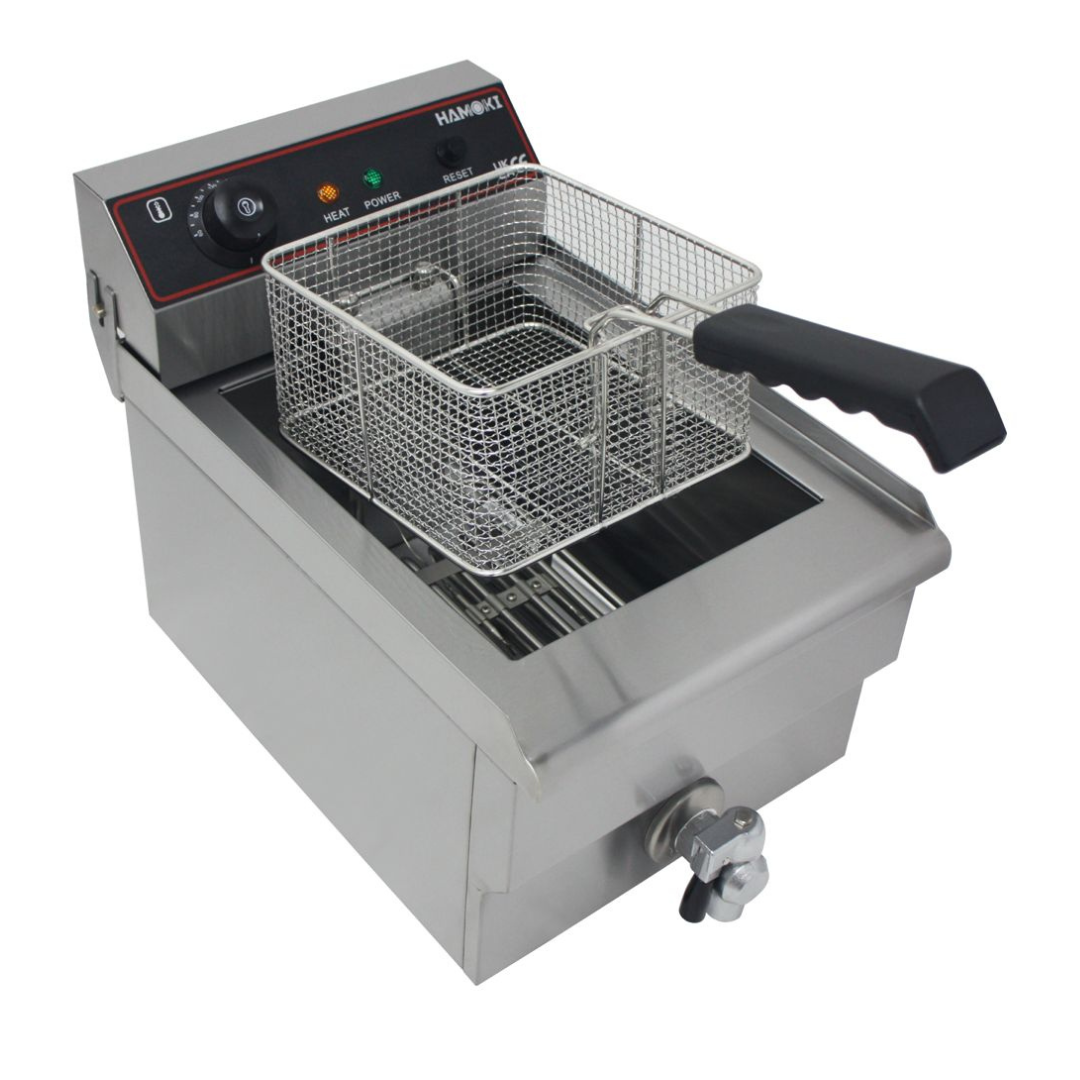
Hamoki EF-131V-P
9.5L Countertop Electric Fryer
Single-tank countertop fryer with a drain tap, suitable for kitchens requiring a compact electric frying station.
Freestanding Deep Fat Fryers
Freestanding fryers provide a dedicated floor-standing frying station and are suitable for kitchens where fried food is an important part of regular service.
When comparing freestanding fryers, look at the number of tanks and baskets, heating power, gas or electrical requirements and available kitchen space.
The Hamoki GF90 is a single-tank gas fryer with twin baskets and three burners. Its listed specifications include an 18–23L capacity and 26.4kW input rating.
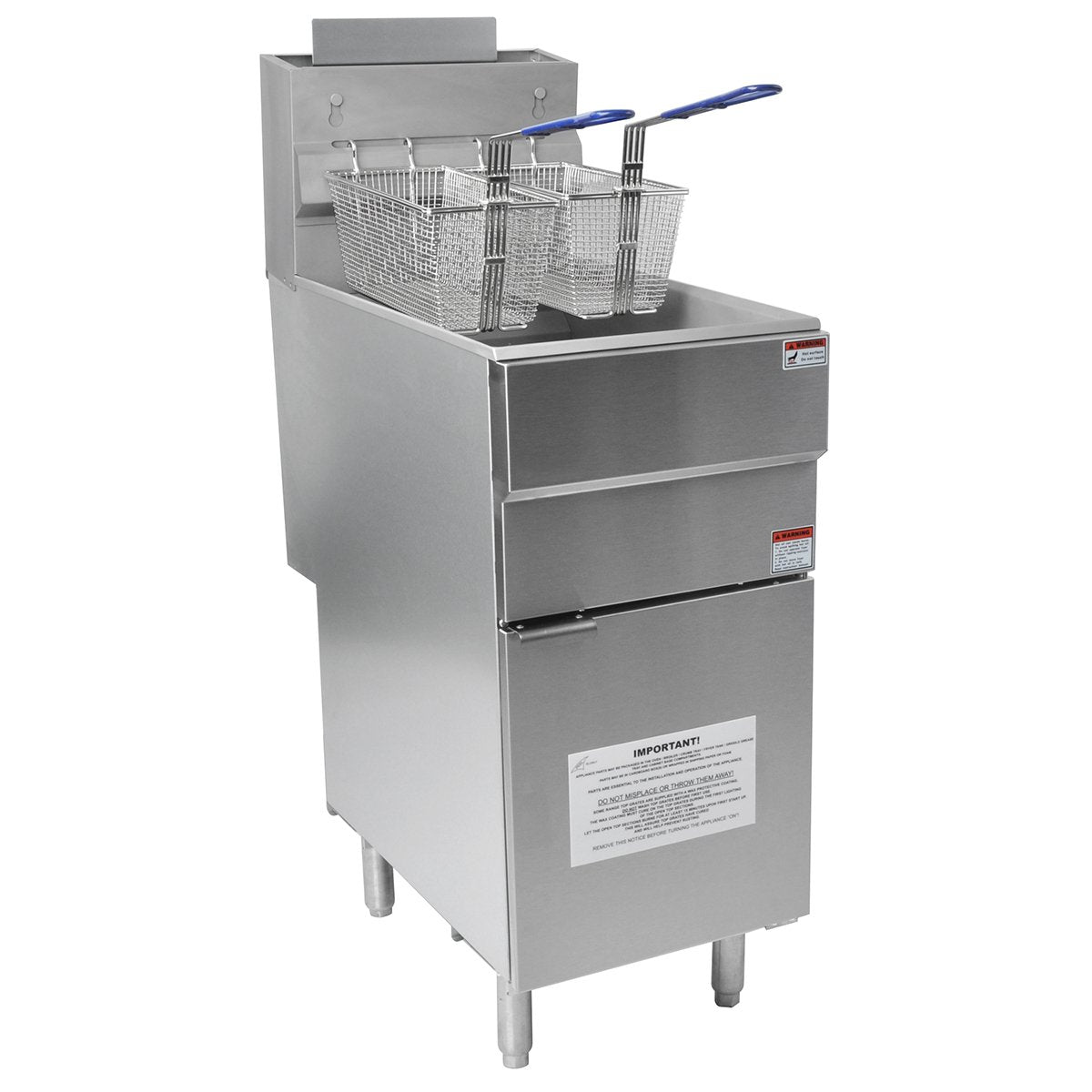
Hamoki GF90
Freestanding Gas Fryer
Single-tank gas fryer with twin baskets, three burners, a drainage spout and cool-zone design for commercial kitchens.
Electric Open Deep Fat Fryers
Electric open fryers are designed for kitchens requiring larger electric frying stations and are available with single, twin and multi-tank layouts.
They are particularly relevant when frying is a significant part of daily service and smaller countertop equipment would be too restrictive.
The Hamoki DGF-D26L features two separate 26L tanks, each with a working oil capacity of 21.5L. It has two independent 14kW electrical supplies and requires a three-phase connection.
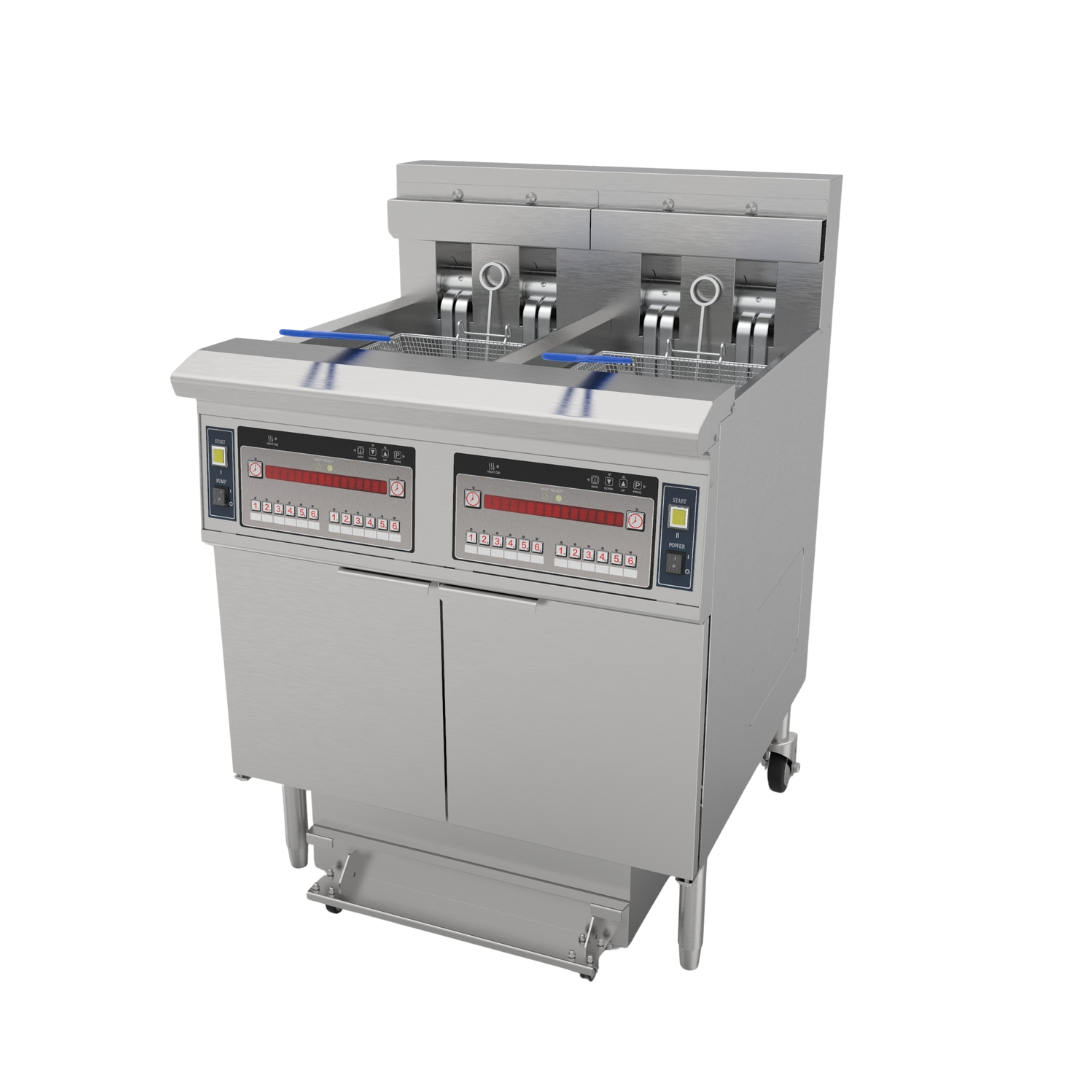
Hamoki DGF-D26L
Twin-Tank Electric Open Fryer
Freestanding electric open fryer with two 26L tanks, programmable controls and built-in oil filtration. Suitable for kitchens requiring two independent frying areas.
Commercial Pressure Fryers
Pressure fryers operate differently from conventional open fryers. Food is cooked inside a sealed, pressurised chamber, making them particularly relevant for pressure-fried chicken.
These machines are not simply larger versions of conventional fryers. They use a different cooking process and require appropriate operating procedures and maintenance.
The Hamoki 15L countertop pressure fryer offers a compact option for businesses preparing pressure-fried products without a full freestanding machine.

Hamoki TP-16L
15L Countertop Electric Pressure Fryer
Compact pressure fryer designed for commercial kitchens preparing pressure-fried chicken and similar menu items.
What Size Commercial Deep Fat Fryer Do I Need?
Start by estimating how much food you need to cook during your busiest service, how many portions are required per batch and how quickly you need to repeat those batches.
One of the most important distinctions is that oil capacity is not the same as food capacity.
- Tank capacity: The physical capacity of the fryer's oil tank.
- Working oil capacity: The amount of oil used during normal operation.
- Food capacity: The manufacturer's stated maximum food load per batch, where available.
- Hourly output: The amount of food a fryer can produce over time, where manufacturer-tested figures exist.
Why Does Fryer Power Matter?
Fryer power affects how the oil heats and recovers temperature after food is added.
It also determines the electrical or gas supply needed for installation. A compact 3kW fryer may use a 13A connection, while larger electric open fryers can require dedicated three-phase power.
For example, the Hamoki DGF-D26L operates with two independent 14kW supplies and requires three-phase electrical installation.
Before purchasing, check the manufacturer's installation instructions and ensure your kitchen has the appropriate utilities available.
Single Tank vs Twin Tank Deep Fat Fryers
A single-tank fryer provides one frying chamber and can work well when most orders use similar cooking temperatures and products.
A twin-tank fryer provides two separate frying chambers. This is useful when different foods need to be cooked independently or additional flexibility is needed during busy periods.
It is important to distinguish between a single tank with two baskets and a genuine twin-tank fryer. Two baskets sharing one oil tank do not provide independent oil temperatures.
The Hamoki EF-132V-P is an example of a twin-tank countertop fryer, with two separate 3kW heating systems.
Electric vs Gas Commercial Deep Fat Fryers
Electric Fryers
Electric fryers range from compact countertop models to larger freestanding three-phase systems.
They can be suitable for kitchens with the appropriate electrical capacity and are available in several tank configurations.
Gas Fryers
Gas fryers are another option for commercial kitchens with suitable gas infrastructure.
Check whether the model is configured for natural gas or LPG and confirm installation requirements with an appropriately qualified Gas Safe registered engineer.
Neither option is automatically better for every kitchen. Consider available utilities, cooking requirements, installation and equipment specifications.
Other Features to Consider Before Buying
- Oil drainage: Drain taps and valves can make routine oil management easier.
- Filtration: Built-in filtration systems may help with oil management on larger equipment.
- Temperature controls: Check the available temperature range and whether tanks can be controlled independently.
- Cleaning: Consider how easily baskets, tanks and other components can be accessed.
- Kitchen layout: Measure the available space and check installation, ventilation and servicing requirements.
A fryer should fit into your wider kitchen workflow, alongside your other commercial cooking equipment.
Commercial Deep Fat Fryer FAQs
Common questions about fryer capacity, installation and choosing the right model.
How much food can a 10L fryer cook?
There is no direct conversion between litres of oil and kilograms of food. Look for the manufacturer's maximum food capacity or basket load instead.
Does a bigger oil capacity mean higher output?
Not necessarily. Oil capacity, basket size, heating power, recovery performance and food load all affect production capacity.
Should I choose a countertop or freestanding fryer?
Countertop fryers are useful where floor space is limited or an additional frying station is required. Freestanding fryers provide a dedicated floor-standing cooking station.
Can a commercial fryer use a normal plug?
Some smaller models use a standard 13A connection. Larger electric fryers may require hardwired or three-phase supplies. Always confirm the current electrical specification.
Are twin-tank fryers better than single-tank fryers?
Twin tanks offer separate frying areas and can provide greater flexibility when cooking different foods. A single tank may be sufficient for kitchens with straightforward frying requirements.
What is the difference between an open fryer and a pressure fryer?
An open fryer cooks food in an open tank of hot oil. A pressure fryer cooks food inside a sealed, pressurised chamber and is particularly relevant for pressure-fried chicken.
Should I choose a gas or electric fryer?
Choose based on your available utilities, cooking capacity, installation requirements and the specifications of the individual model.
How often should fryer oil be changed?
Oil life depends on the foods cooked, operating temperatures, filtration and usage. Follow your food safety procedures and the manufacturer's guidance for checking and changing oil.
Find the Right Commercial Fryer for Your Kitchen
Explore Hamoki's range of countertop, freestanding, electric open and pressure fryers, or speak to our team about the cooking capacity and installation requirements for your business.